Sound familiar?Niagara Falls
- The call
- You are inside, the deadbolt is thrown, and the thumb-turn will not budge. It moved a little last week with some effort. Now the door you walk through every day is a wall, and you need it open.
The key slides all the way in, exactly as it has for years, and then refuses to turn in either direction. Yesterday it needed a small wiggle.
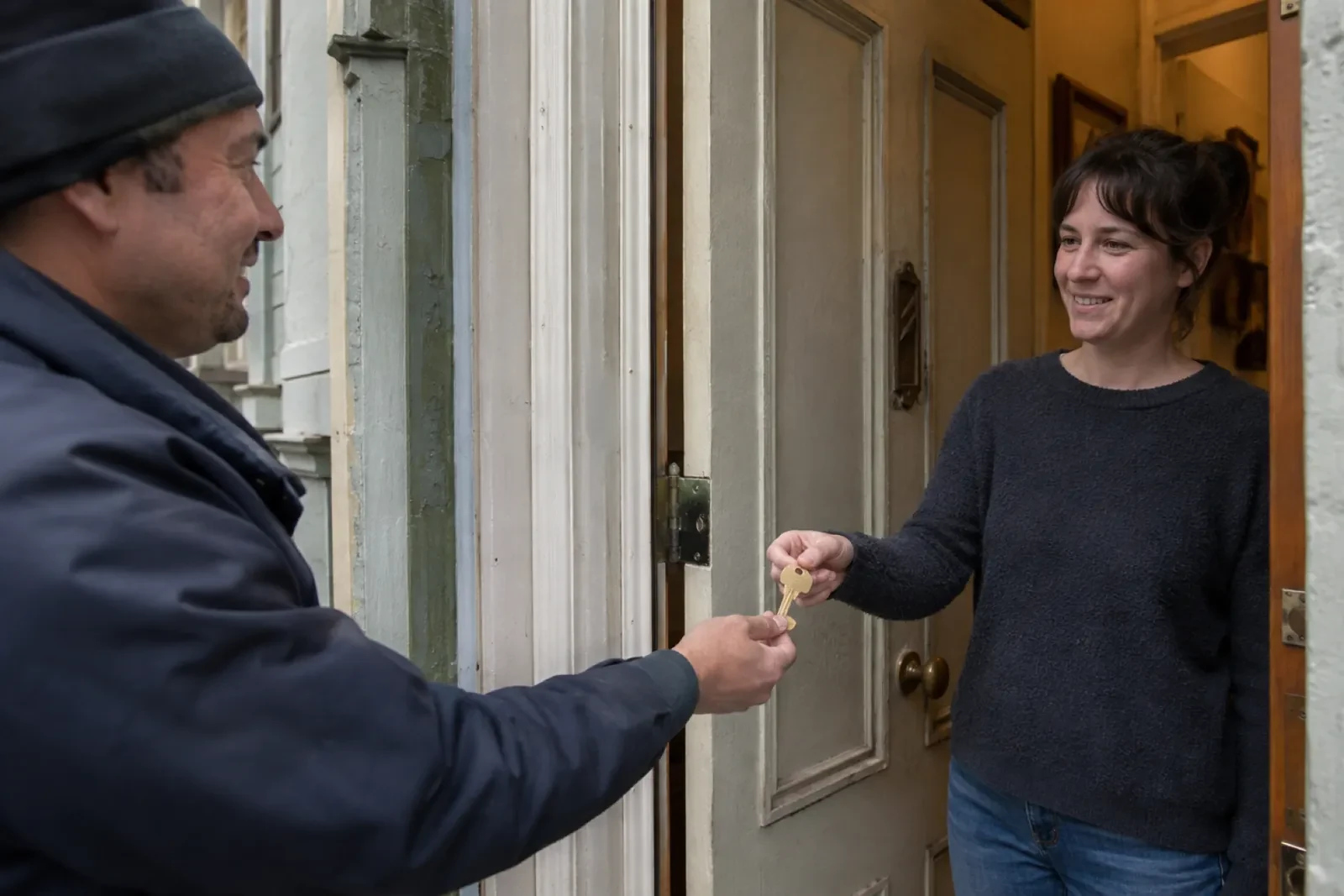
The visit runs in a set order. On the phone you describe what the key does: refuses to turn, spins freely, or works only when the door is pushed. That description tells the locksmith what to bring. At the door, identification and your connection to the property are confirmed. The key, keyway, door fit and strike are examined before anything is forced. The opening uses the least disruptive method the condition allows. Then the failed part is serviced or replaced, the door is adjusted if it caused the jam, and the lock is tested open and closed with every key before the locksmith leaves.
Sound familiar?Niagara Falls
Seized & Jammed Lock Opening · Niagara Falls
Scene 1
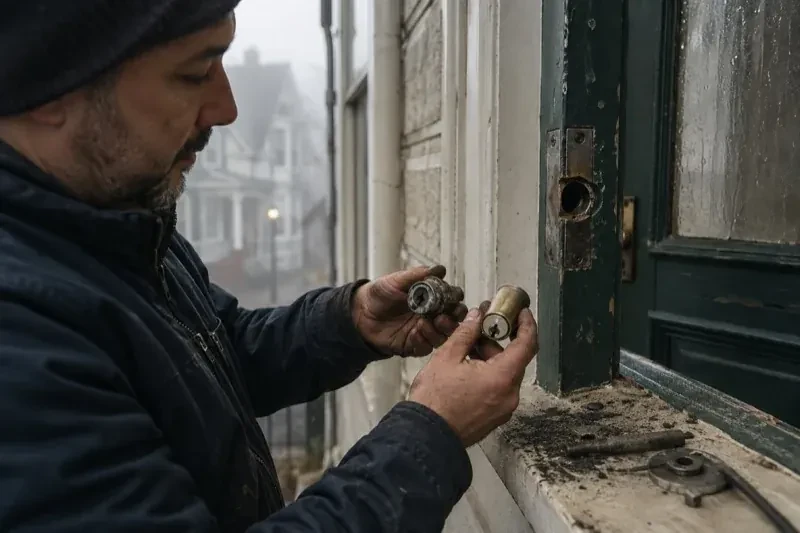
A small mirror and a bright light show what the keyway has collected. Salt crust, sand, metal filings, sawdust from a renovation and the gummy residue of household spray oils are all common, and each reads differently: a dry gritty feel, a sticky drag, or a plug that will not accept the key to full depth. Ice shows as frost on the cylinder face and a key that stops short. A cylinder cap that has loosened lets the plug sit crooked so the pins never line up. This look decides whether the cylinder needs a flush and dry lubricant, a thaw, a re-tightened cap, or a full strip on the bench.
Scene 2
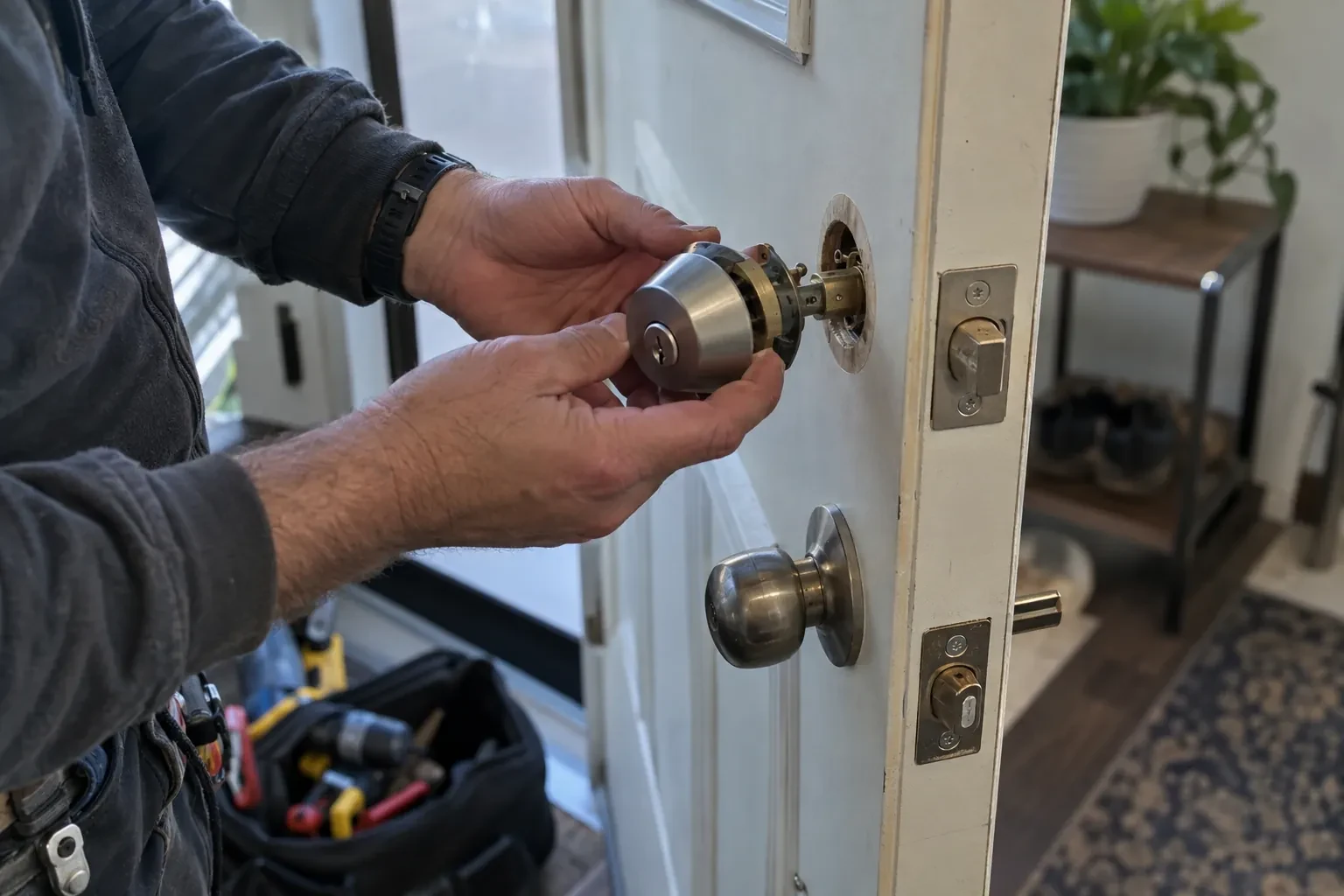
With access restored, a cylinder that seized gets a proper service. The locksmith removes it from the door, slides the plug out with a follower so the top pins and springs stay put, and lays out the pin stacks. Everything is cleaned, worn bottom pins and tired springs are replaced, and any burr on the plug is dressed. The plug is reassembled to the same combination so your existing keys keep working, then lubricated with the product that cylinder's maker specifies and cycled until it turns with a fingertip. If the key that jammed was worn, a fresh one is cut from the code rather than from that key.
Scene 3
If the door was the cause, the hinges, strike and seal have been set so the bolt has room. Keeping it that way is a seasonal habit: each spring and fall, try the lock with the door closed and no pressure on it, and snug the hinge and strike screws if the door has begun to drop. Wood keeps moving with humidity, so a door that swells in August may need a touch on the strike in September. A door that suddenly needs a push to lock is telling you early, while the fix is still a screwdriver and not a seized bolt.
What shapes the quoteDrummond Heights Locksmith Co.
FeesSame any hour
It usually points to the mortise case rather than the cylinder, and it is a common complaint on commercial doors. Inside the case a return spring, a worn hub, or another part of the latch's drive path can have failed, so the lever moves without driving the latch. The locksmith gets the door open, draws the case out of the door edge, replaces the worn part, cleans and greases the contact points and refits everything, then tests lever, key and thumb-turn together.
In most cases, yes. A bolt held by the door is freed by relieving the pressure on the door. A cylinder clogged with grit or ice is cleaned and thawed until it turns. A failed tailpiece is bypassed and replaced. The lock stays on the door with its finish and your existing keys. A plug or shell that is worn, damaged, or eaten through by corrosion or earlier forcing is what has to be replaced, and that is explained before any work starts.
Try the key while gently pushing, pulling and lifting the door. If it frees up in one position, the bolt is being pinched by the frame and the door is the cause. If nothing changes, look at the key: does it go fully in and refuse to turn, or spin freely? The first points to the cylinder, the second to the tailpiece behind it. Tell the locksmith which you found and the right parts come in the van.
NiagaraOntario
Seized & Jammed Lock Opening · Chippawa, Drummond Heights, Falls View
Every square is one home in a hundred.
On-site assessment
The key slides all the way in, exactly as it has for years, and then refuses to turn in either direction.
(289) 271-0790, open 24/7.
On-site assessment preferred · (289) 271-0790, open 24/7