Sound familiar?Chippawa
- The call
- The kitchen delivery door gets shouldered open more than a hundred times a shift, and lately the latch slips past the strike plate instead of catching it on the first push.
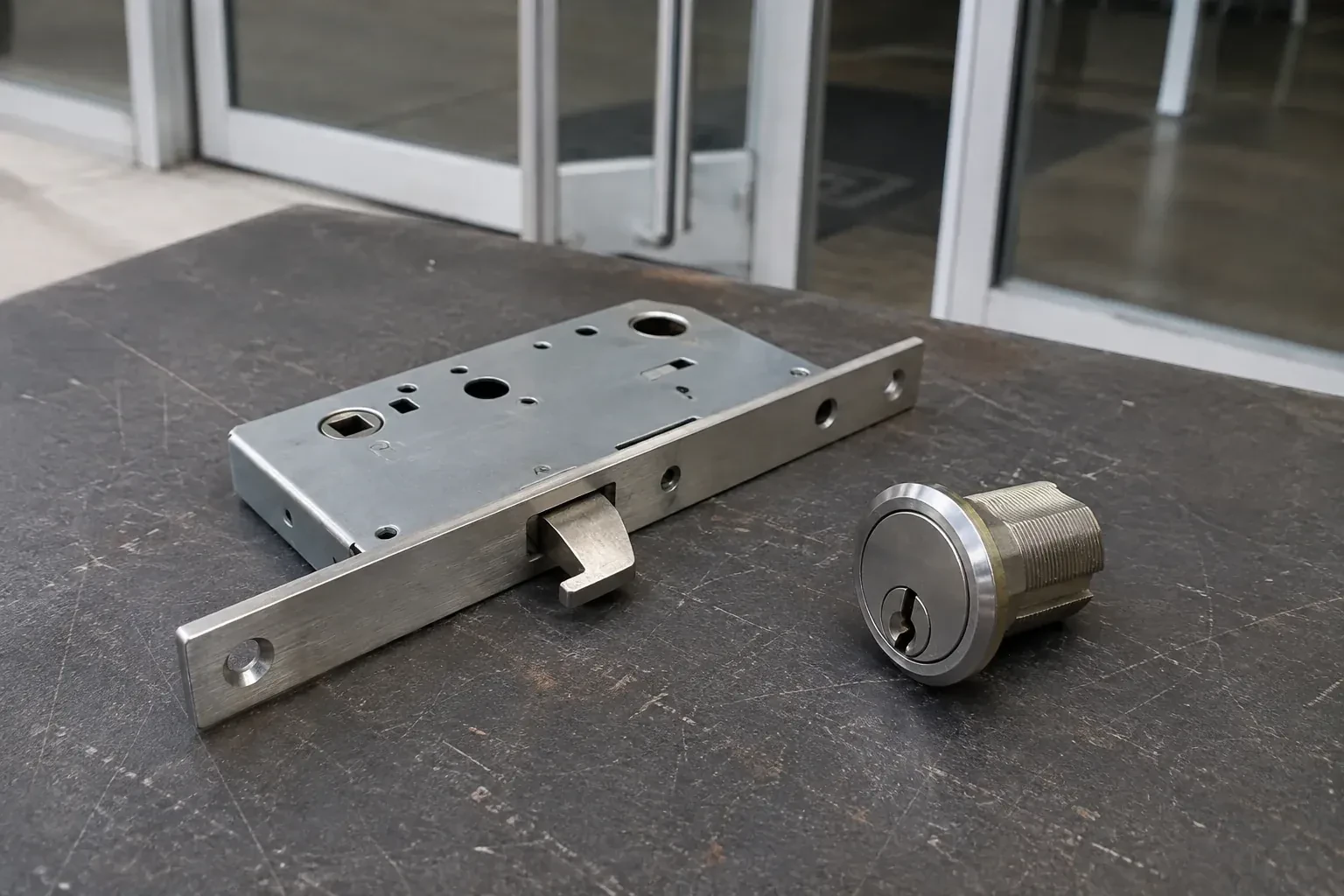
An inspection report flagged the rear exit as needing hardware that opens with one motion and no key, and that door currently has an ordinary keyed knob on the inside.
Fire separations and exit routes add a layer that a house entry door never has, and this service is where that layer gets handled properly. A door that forms part of a fire separation needs hardware listed for that door's rating, and a door on a required exit may need to open with a single motion and no key once the building's occupant load crosses a threshold. The locksmith checks whether either condition applies to this specific opening, selects hardware that satisfies it, and installs the new lock so the door still closes and latches the way a fire-rated or exit door is required to.
Sound familiar?Chippawa
Commercial-Grade Lock Replacement · Chippawa
Scene 1
Some commercial doors are part of a fire separation or a required exit route, and that status changes which hardware is legal to install on them. The locksmith looks for a fire label on the door and frame, checks whether the opening serves an assembly space or a high-occupant-load area that calls for listed, push-type release hardware, and confirms whether the door is required to close and latch on its own. None of this is guesswork; it is read directly off the door, its label, and the building's own occupancy information.
Scene 2
The cylinder installed is the one agreed during the assessment: keyed into an existing master or grand-master system, set up as a new interchangeable core the business can rekey itself later, or cut to a restricted keyway that limits who can order duplicate keys. Where several doors are being brought onto one system in the same visit, cylinders are combinated so a single key or a defined set of keys operates every door that is supposed to share access.
Scene 3
Where the visit brought hardware onto a shared master or interchangeable-core system, the business now has one coherent structure instead of a different cylinder on every door. A master key opens what it is supposed to, sub-master and change keys are limited to their own doors, and the key-control log reflects exactly who was issued what. The next time a lock needs attention, whoever handles it can read that log rather than guessing at what system, if any, the previous hardware belonged to.
What shapes the quoteDrummond Heights Locksmith Co.
FeesSame any hour
That is a decision for the business, not the locksmith, but the general practice is to limit master keys to the smallest number of people who genuinely need building-wide access, and to log who holds each one. Sub-master and change keys can then cover departments, shifts or single doors without every key holder carrying access to everything.
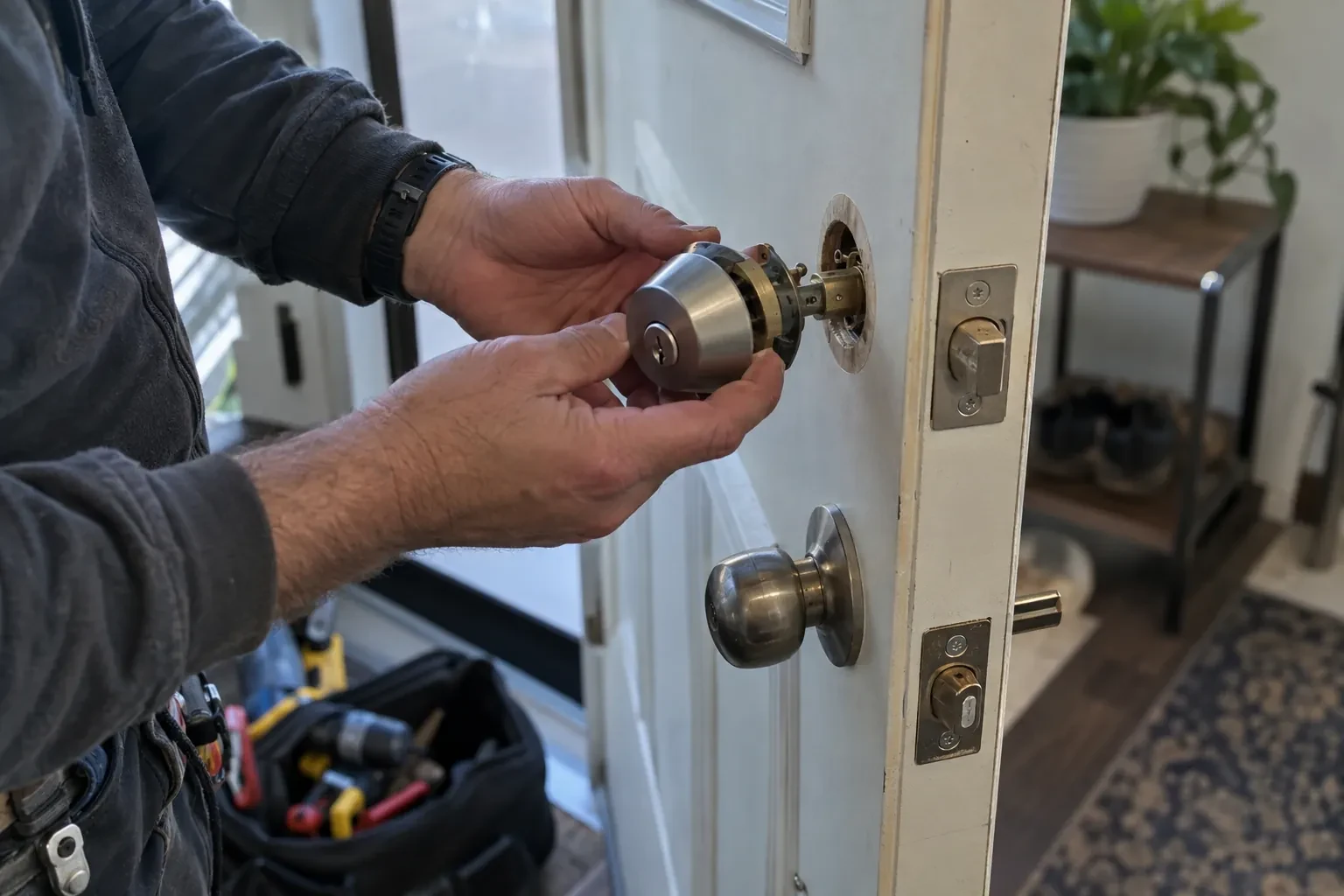
In most cases, yes. Replacement hardware is chosen to fit the door's existing mortise pocket, bore pattern or narrow-stile prep, so the visit does not usually involve altering the door itself. Re-cutting only comes up when the business specifically wants to change hardware type, for example moving from a knob-and-deadbolt pair to a single mortise lock body.
Yes. An electric strike has to suit the latch or deadlatch type it will receive, the door's handing and swing, and whether the application needs fail-safe or fail-secure operation, meaning whether the door should unlock or stay locked if power is lost. Choosing a strike without checking these against the mechanical lock is a common reason a door releases electronically but still binds mechanically.
NiagaraOntario
Commercial-Grade Lock Replacement · Niagara Falls, Drummond Heights, Falls View
Every square is one home in a hundred.
On-site assessment
An inspection report flagged the rear exit as needing hardware that opens with one motion and no key, and that door currently has an ordinary keyed knob on the inside.
(289) 271-0790, open 24/7.
On-site assessment preferred · (289) 271-0790, open 24/7